Elastic averaging can enable high precision alignment with rapid fabricated parts. This work builds on previous previous design of couplings that combine blind assembly with elastic averaging and self-locking tapers with iterations that are designed for manufacturing. This work builds on analysis of elastic averaging couplings with different numbers of splines/connections and provides additional experimental data to verify analytic predictions.
Work forthcoming in ASPE 40th Annual Meeting this November! See a sneak peek here:
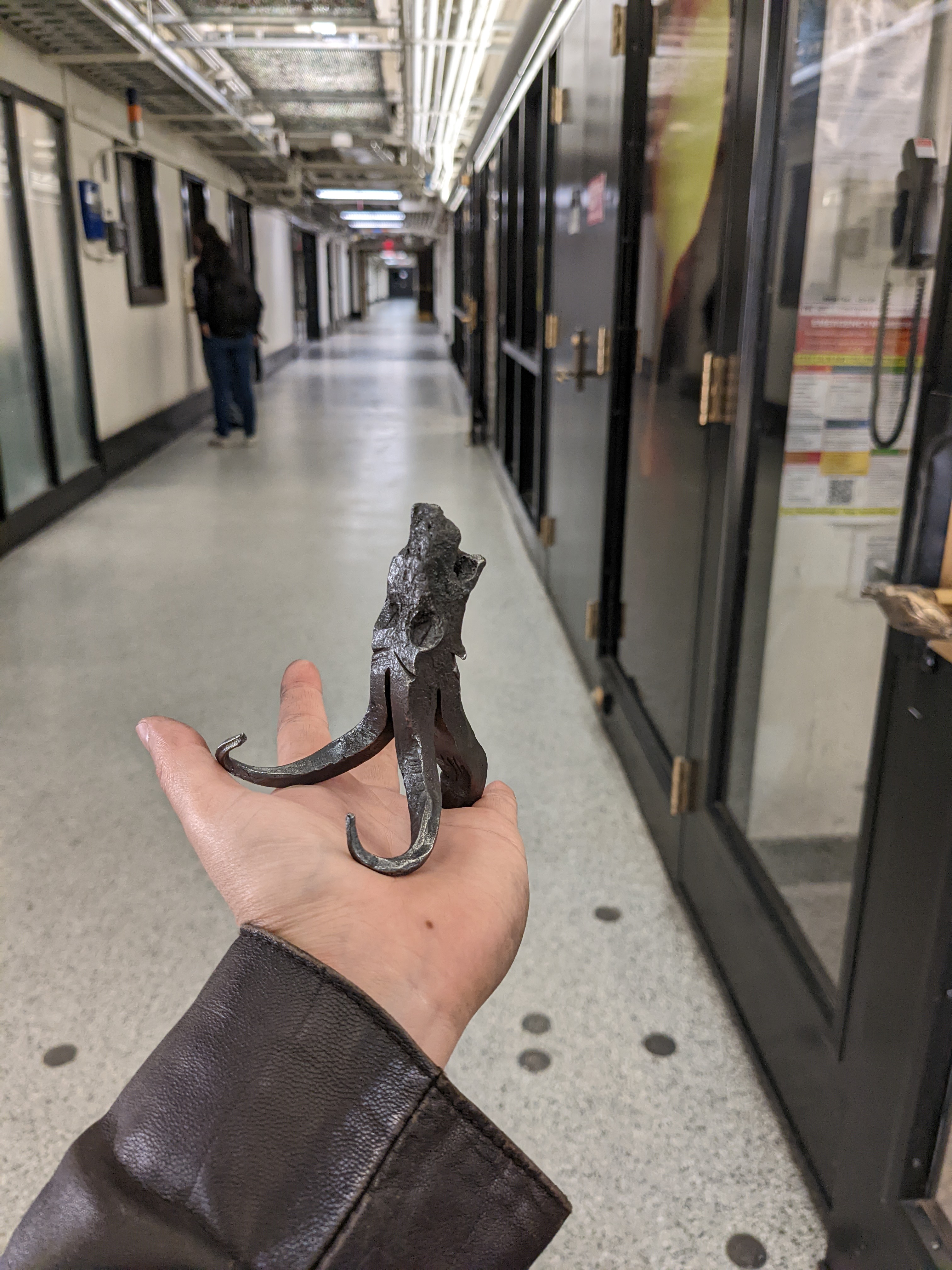
start with 1″ x 1″ stock and cut lines up the center and across using an angle grinder
twist, leaving 1-2″ of stock on either side
flatten one end, hitting cross-ways on the edge of the anvil to keep the indent around the nose
punch the mouth and thin out the bottom, shaping it into a bottle opener (note the break in the jaw is a mistake because I left it in the fire too long. But maybe he’s missing a tooth)
chisel the eyes, nose, eyebrows, and teeth
image above is a work-in-progress; later the top was tapered to a point, twisted, and the entire piece was cleaned and waxed
Tavern Heart Puzzle
Can you separate the heart from the other two pieces? One of my earlier forge projects; read more about it here!
Basket Twist
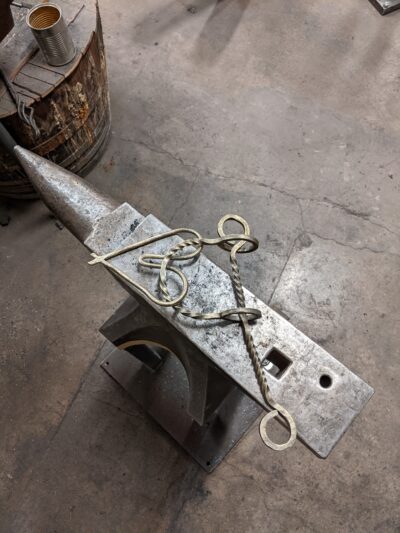
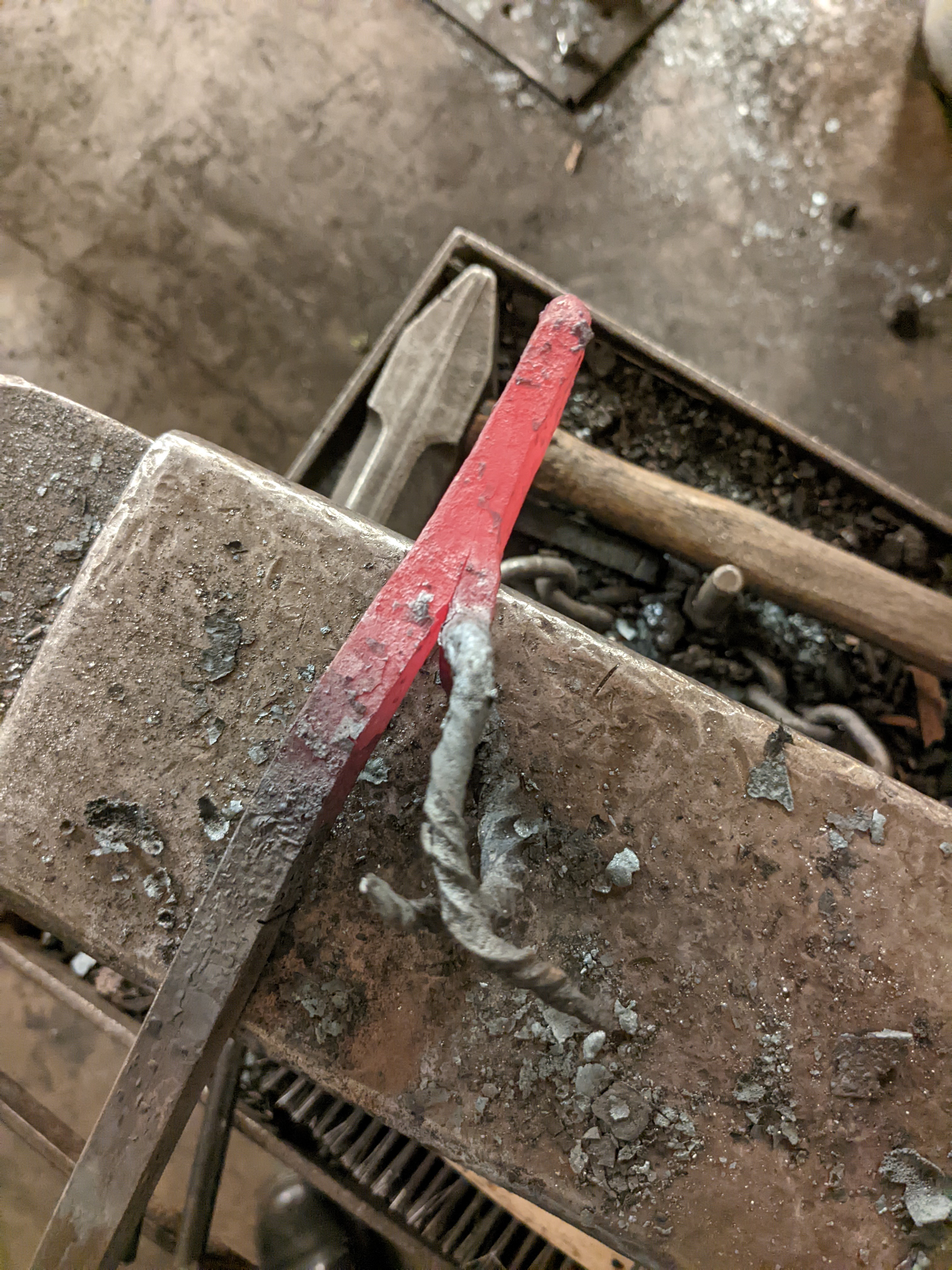
tie together 4 thin square stock pieces using wire and forge weld the top and bottom
in one heat, twist 180-360° and untwist
use a pair of adjustable/thin wrenches to adjust curves as necessary
Misc. Projects
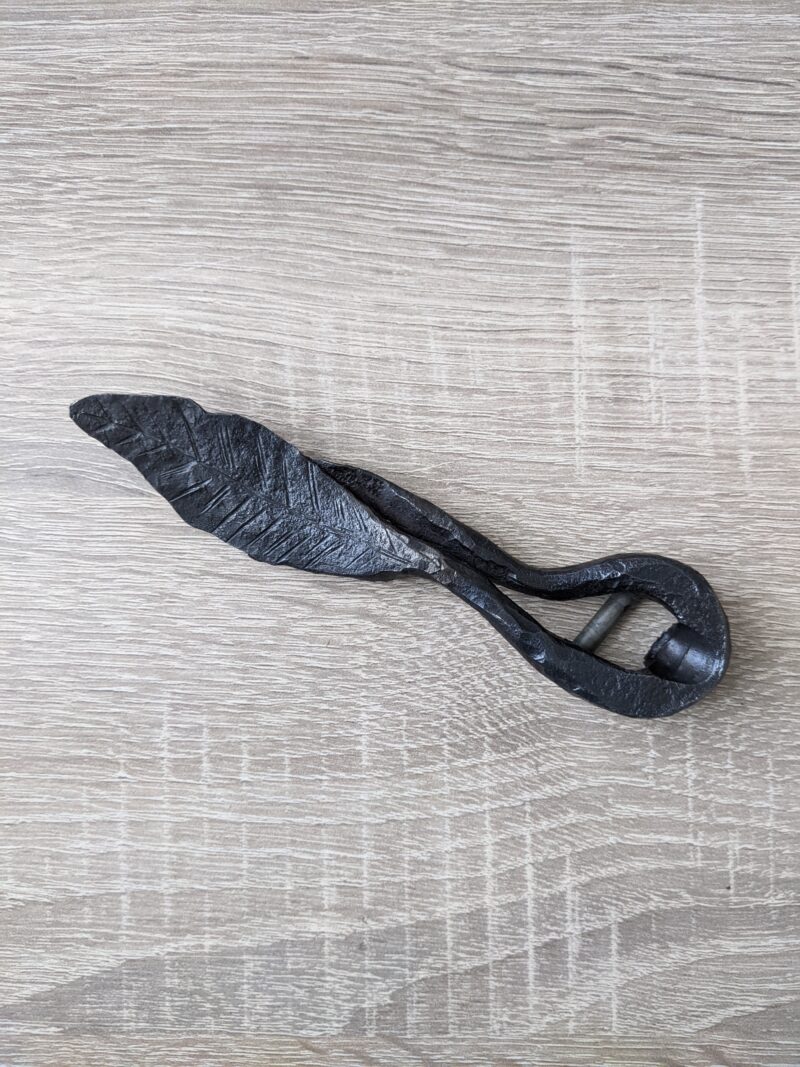
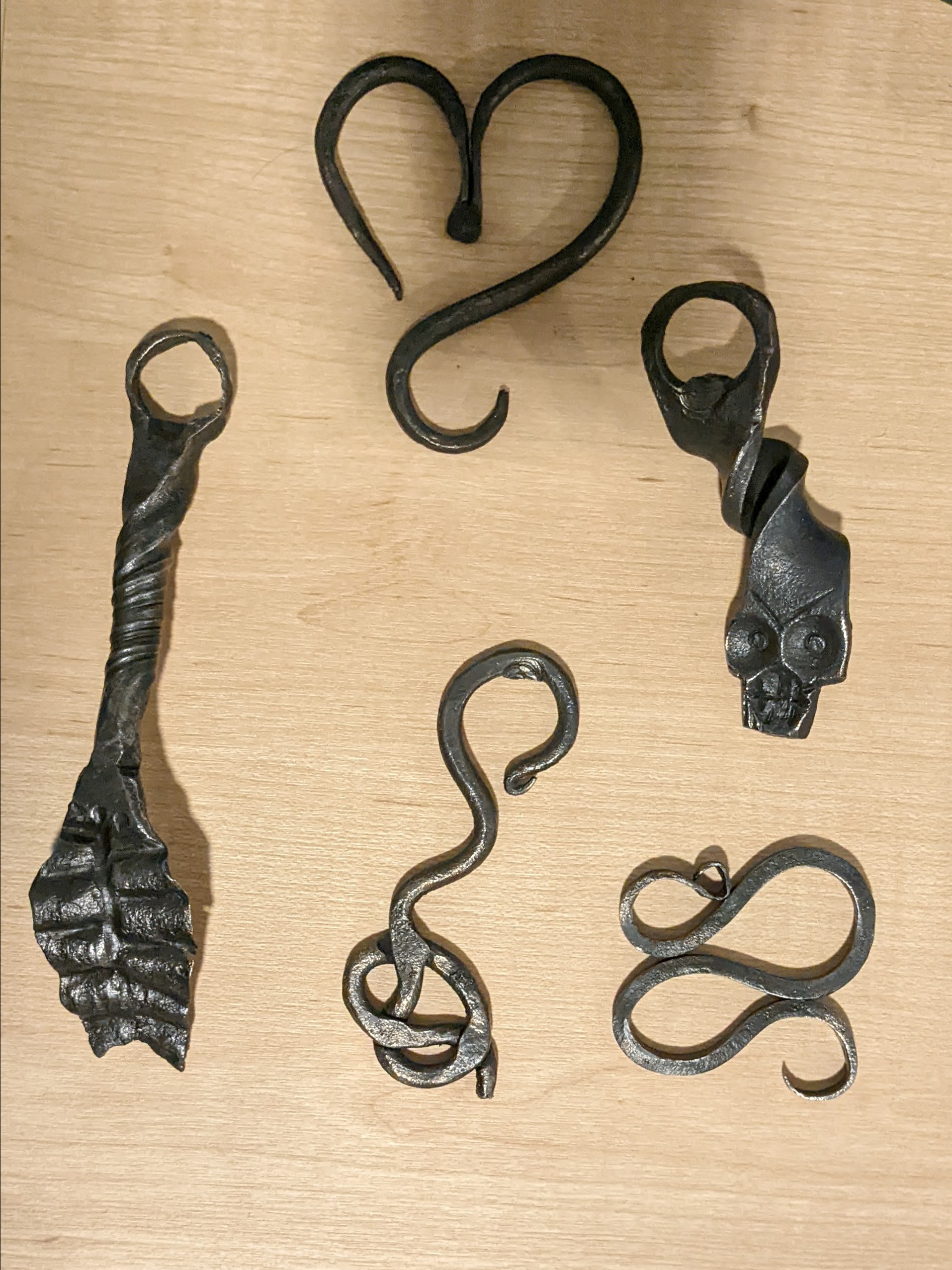
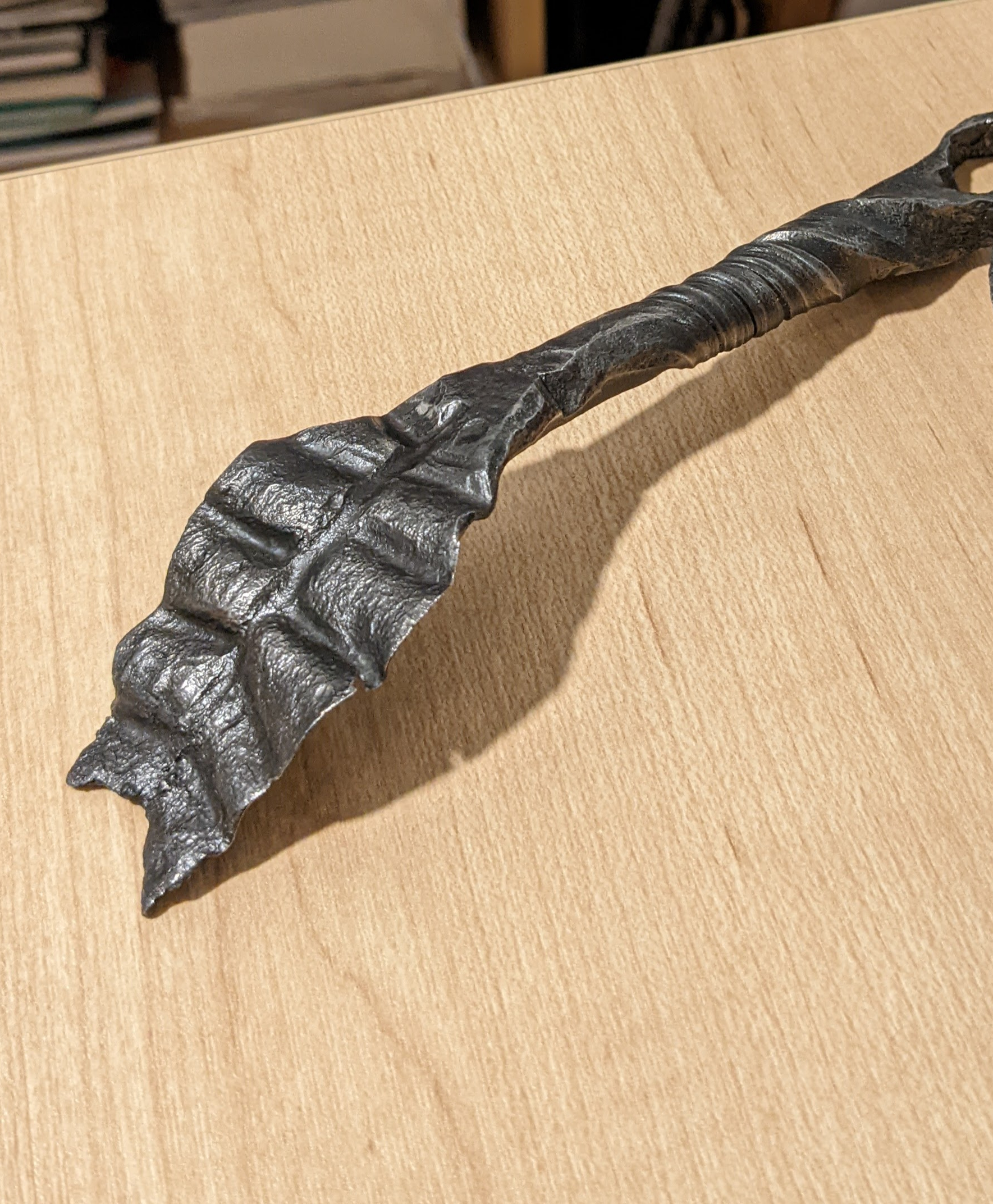
Dragon twist knife forged from a railroad spikeleaf bottle openerchain link and belt loops, one from rebarthe forge
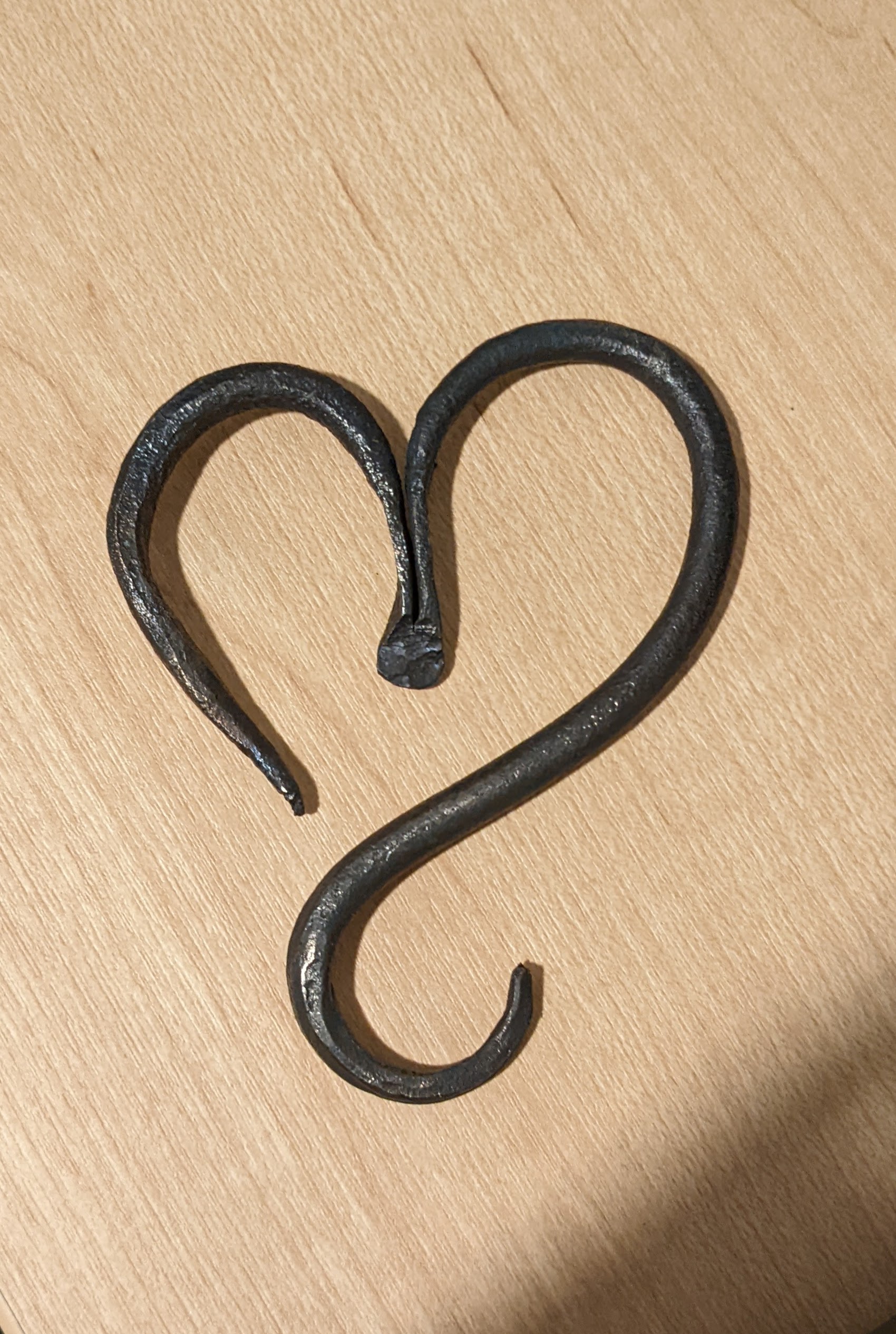
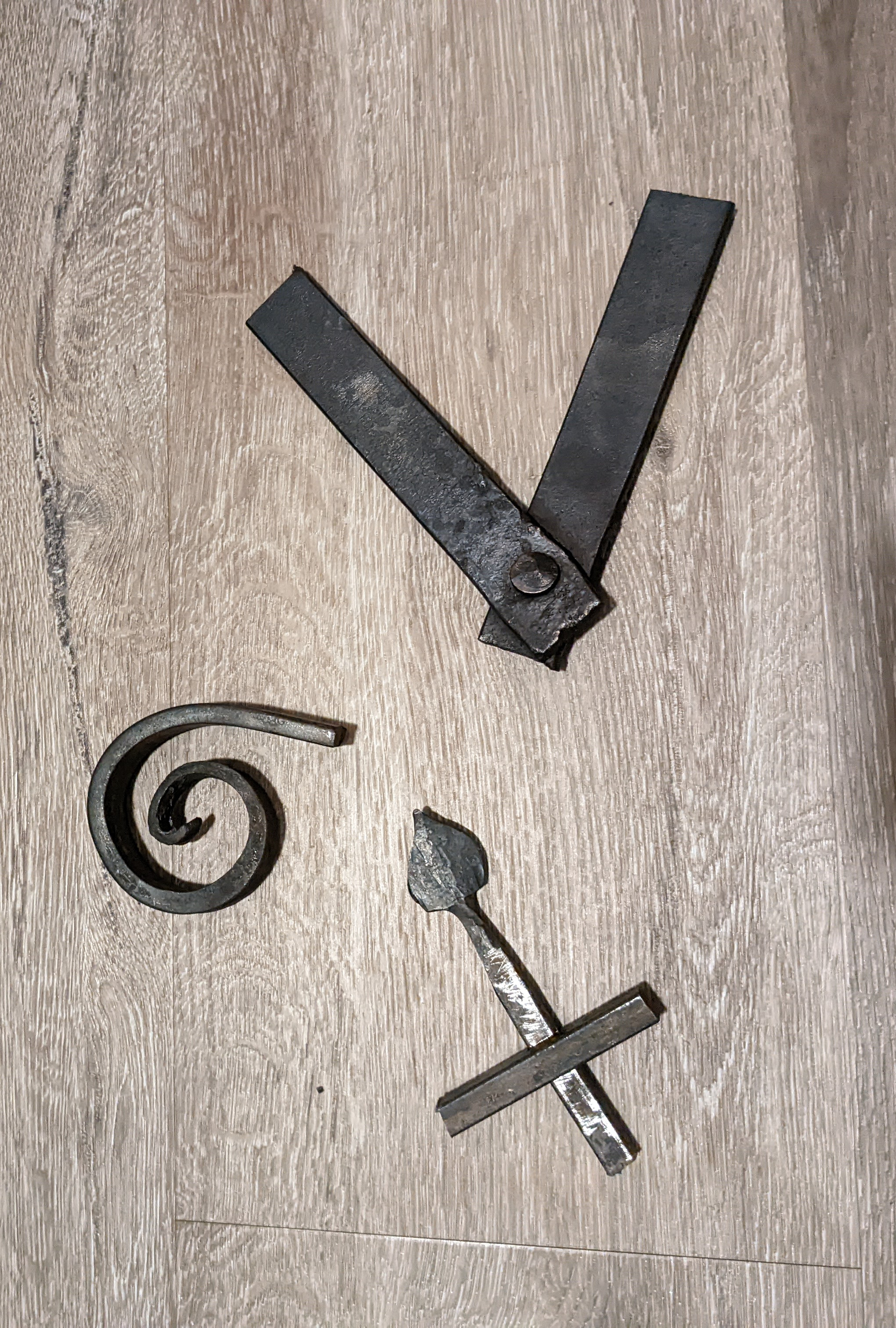
figure-8 knot bottle opener keychainheart bottle openercollection of bottle openersTextured leaf from 0.5″ round stocksheet metal leafRivets, traditional fittings, spiralFORGE WELDING A DRAGON
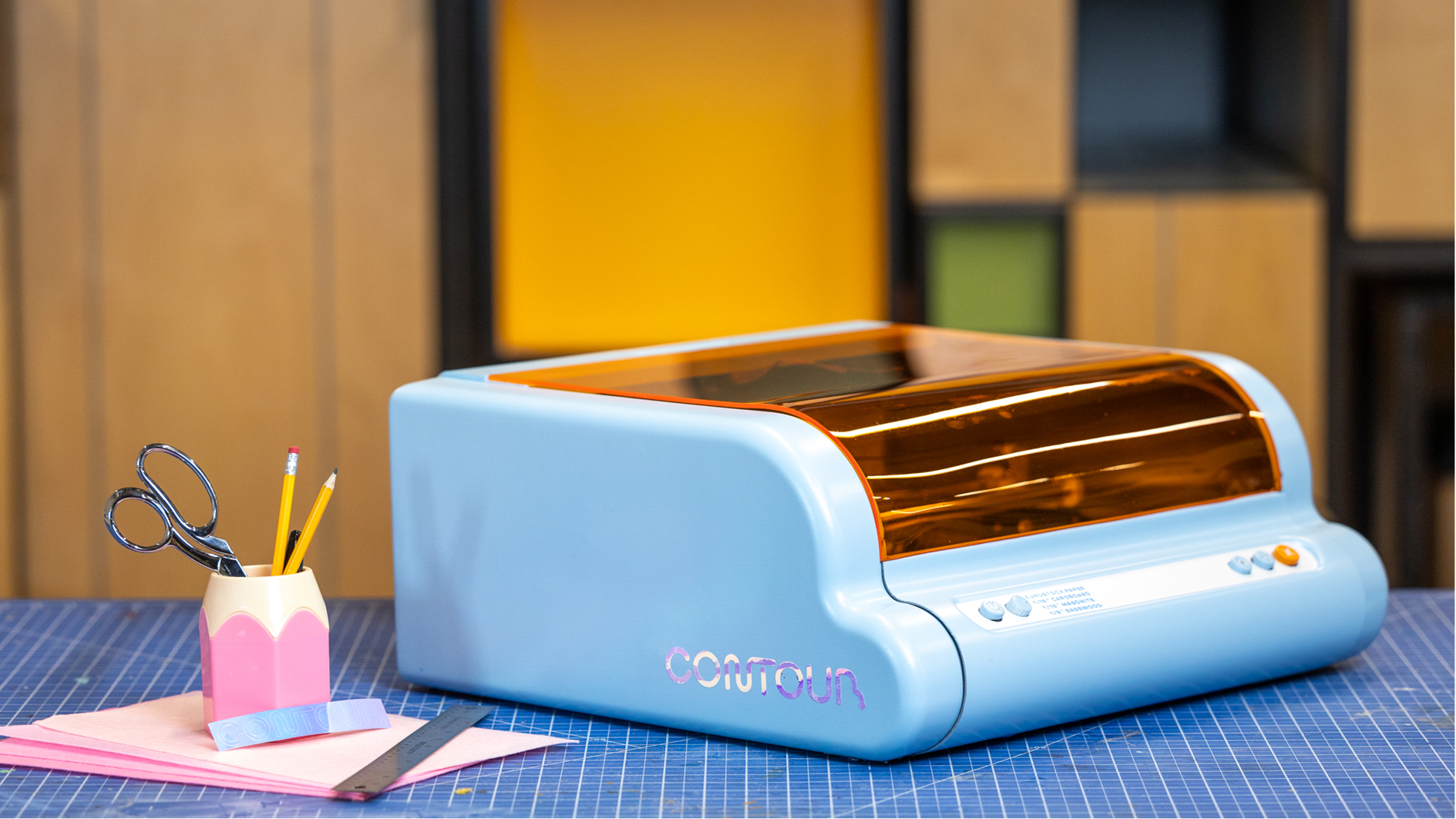
CONTOUR is a laser cutter with line-following capabilities, which allows users to draw directly on materials and laser-cut without the need for CAD software or any computer interface.
I designed electronics and led electronic integration of CONTOUR as part of Pink Team in 2.009, MIT’s capstone mechanical engineering design class.
CONTOUR is powered by a Raspberry Pi microprocessor inside the front panel, which is basically a computer on a chip the size of your hand. When the user hits scan, a Raspberry Pi computer captures an image of the cutting bed via a small camera positioned under the lid.
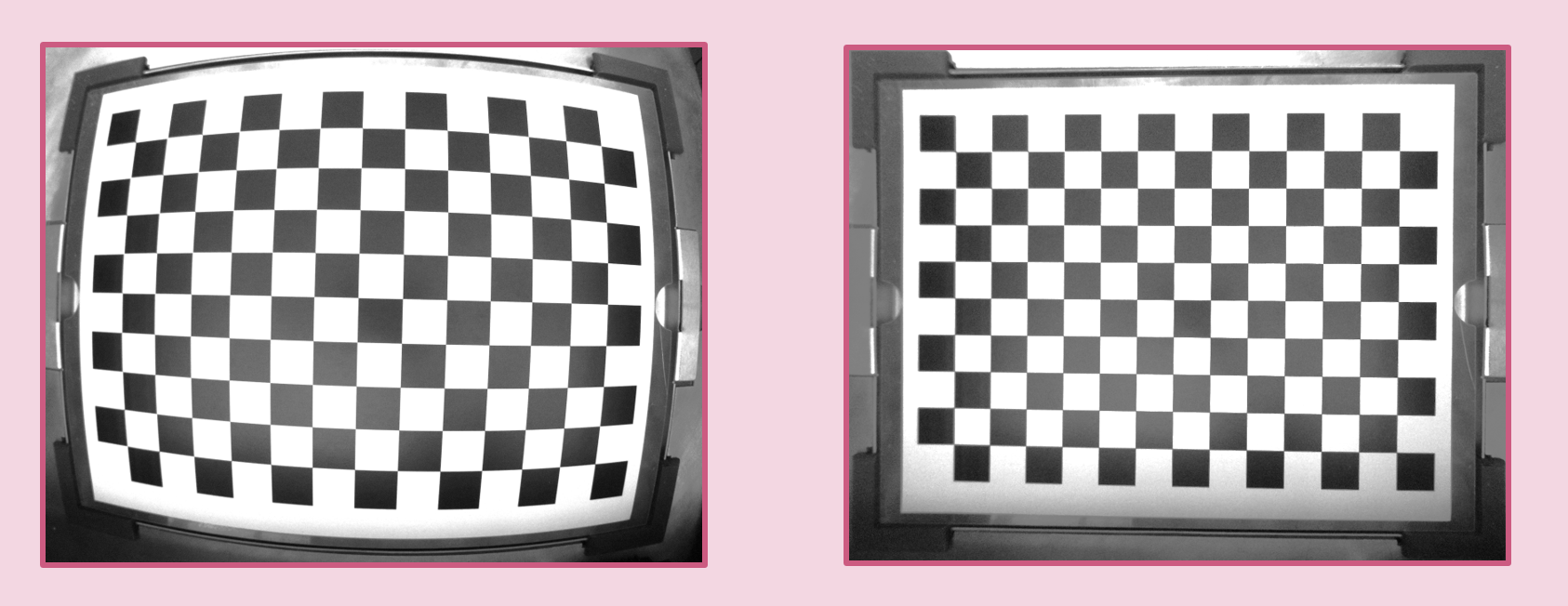
The camera has a fish-eyed lens with a 120-degree Field of View, which allows us to see the entire 9×12-inch cutting bed from only 7 inches away. The raw image from the camera is then run through our undistortion software, which removes the warping of the fish-eyed lens.
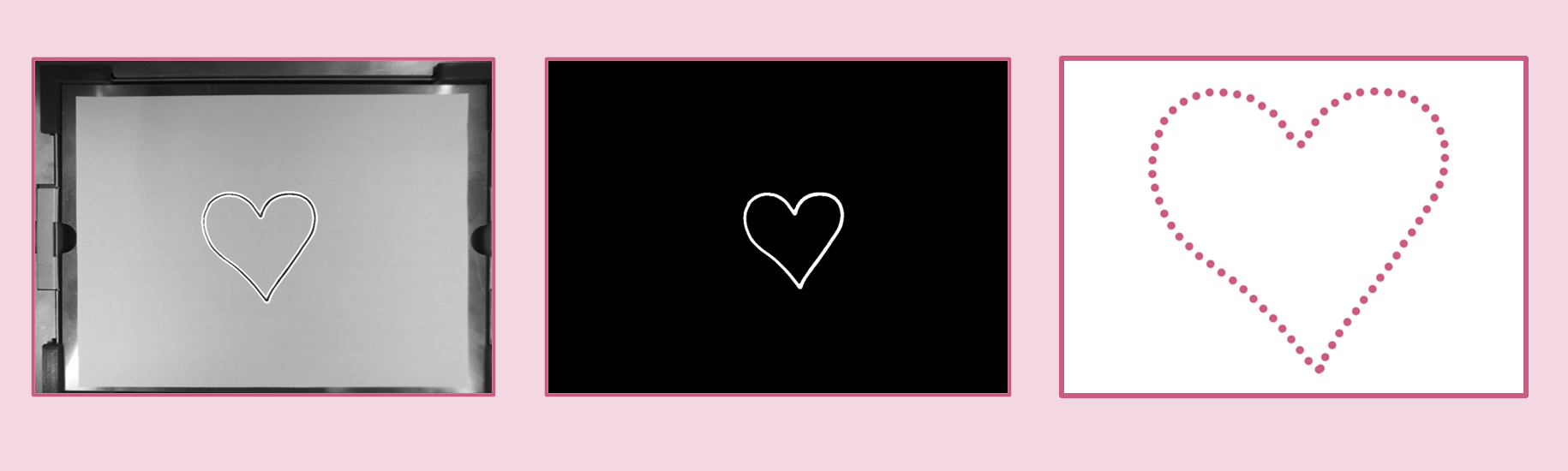
Next, the Raspberry Pi traces the external and internal outlines of the drawing. It finds the centerline and converts that into points. When the user hits cut, the computer sends those points to the motors as a path to follow, and Contour is on its way.
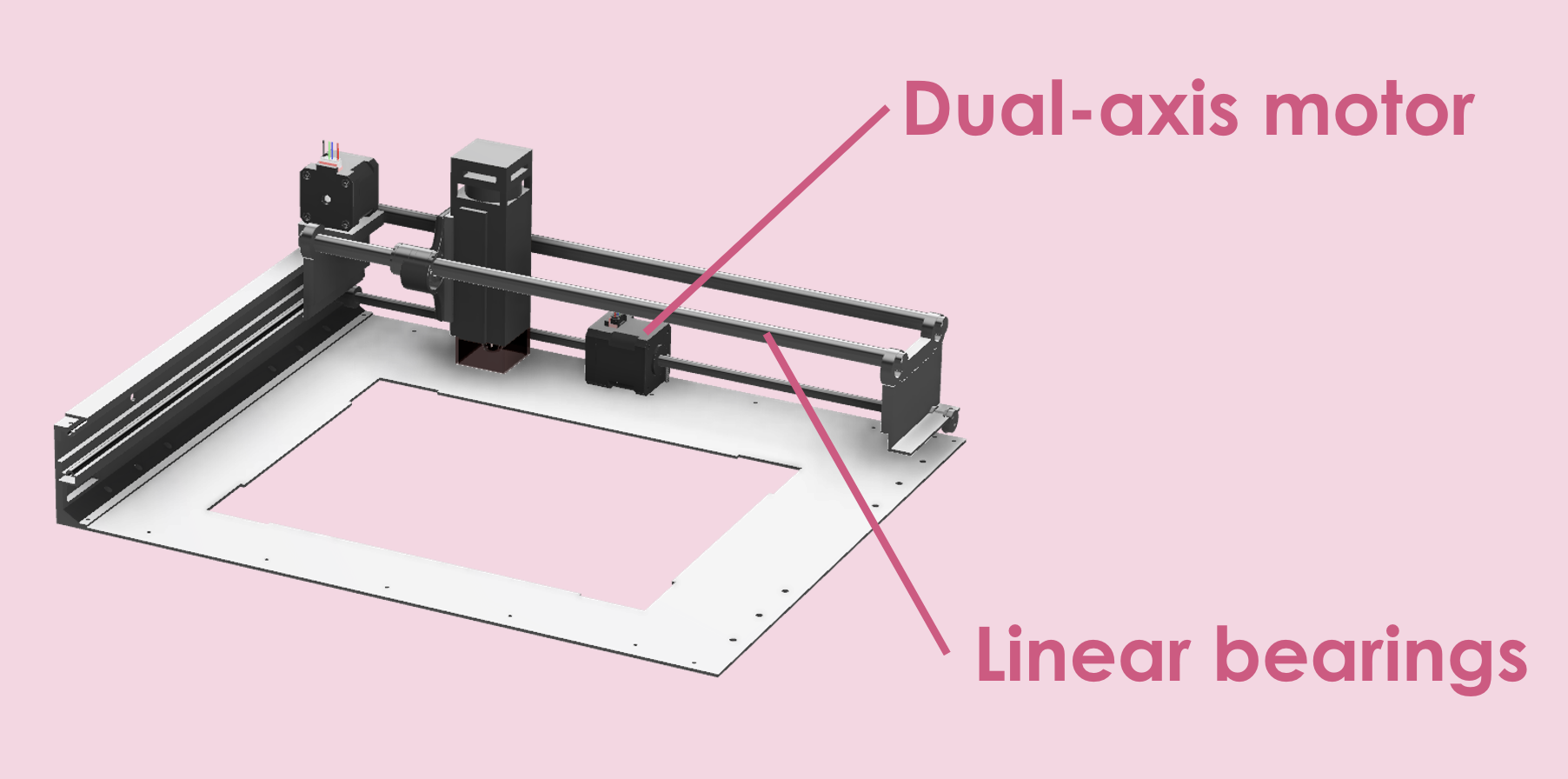
Contour is designed to fit into a small apartment or crowded family home, and our compact gantry system optimizes cutting bed space.
Our stepper motors and linear bearings provide smooth and precise motion. Each motor step is only 0.2 mm, which is three times more precise than the cutting width of the laser.
Our diode laser cuts lines that are 0.6 mm thick, which is equal to the width of a standard ball-point pen. The laser’s power can be adjusted to cut standard crafting materials such as paper, cardboard, wood up to an eighth inch thick.
Burning wood releases smoke, but Contour siphons that smoke away with a built-in fan, which connects to either a ventilation hose or an air filter.
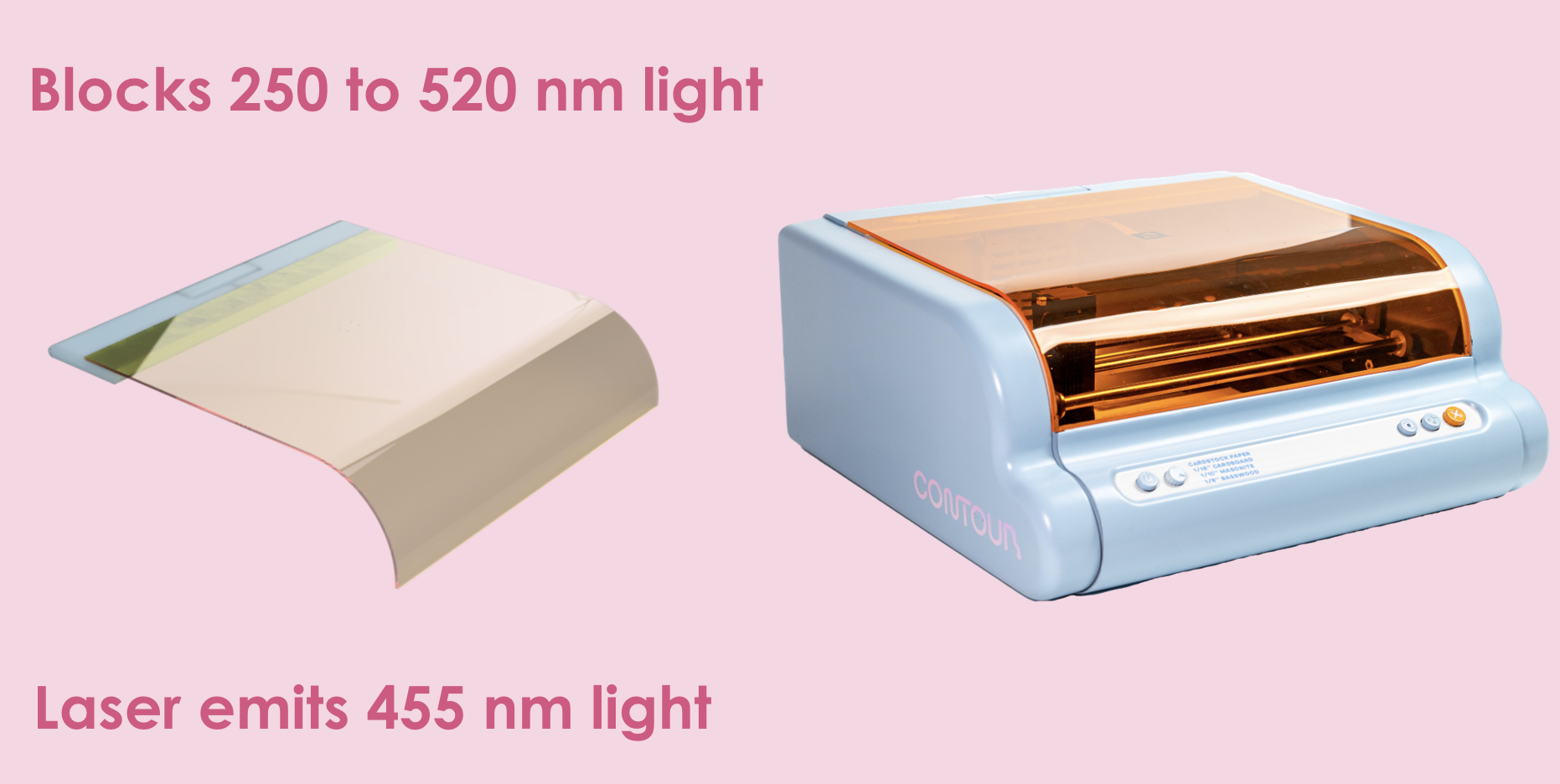
Lasers are bright, but our orange acrylic window protects your eyes from the wavelength of light that our laser emits.
For these safety measures to work, the lid should be closed – but if a user forgets and hits ‘cut’ by accident, don’t worry: there’s a limit switch which triggers if the lid is open, and our software prevents the laser from operating until the lid is closed again.
When Contour is done cutting, all the buttons light up.
We are excited to continue work on Contour’s entrance to the market beyond the scope of 2.009.
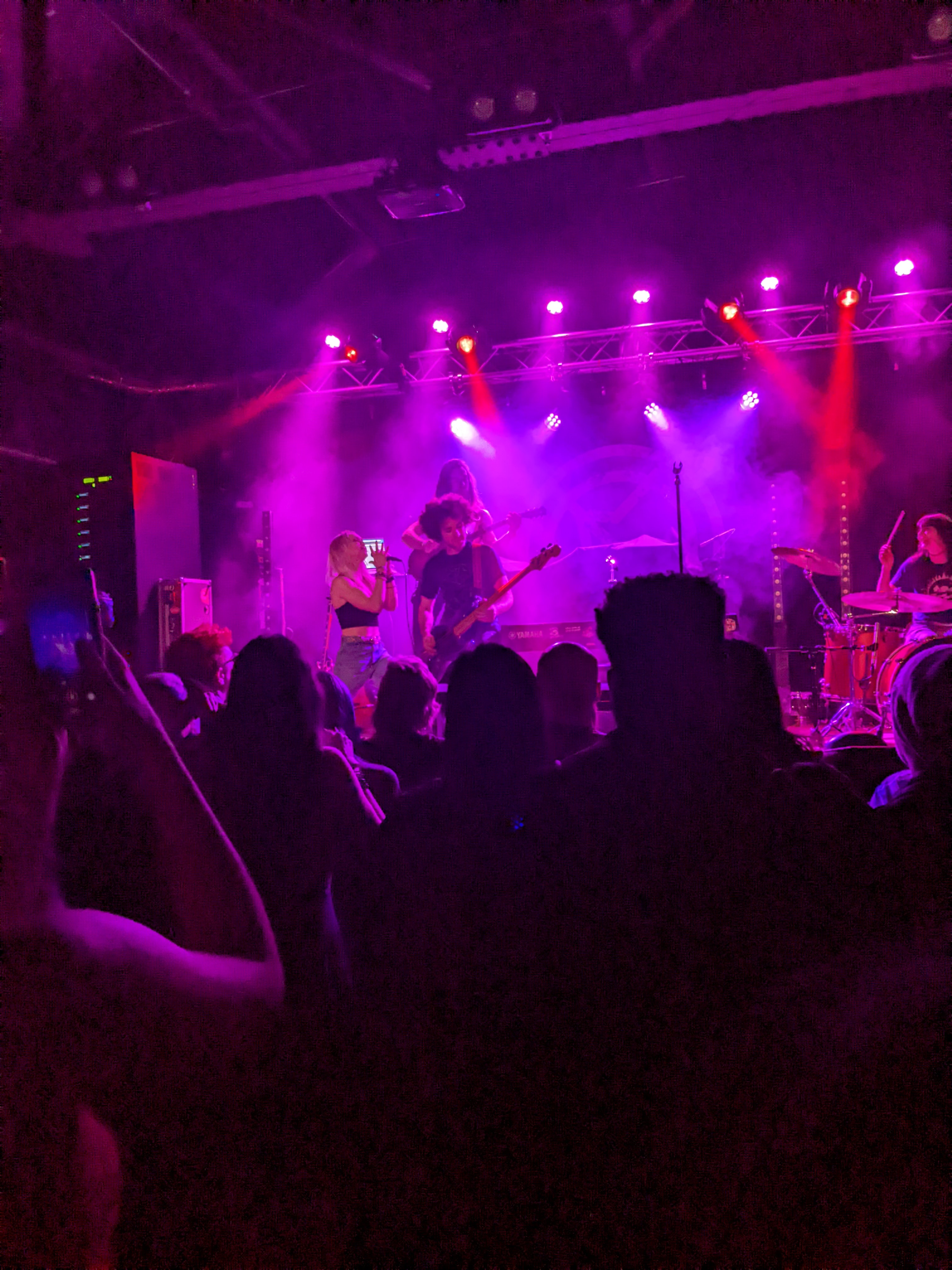
The Concert Lift is a user-friendly shoe attachment that can adjust the height of the platform up to 8 inches for concert-goers who struggle to see over crowds. Unlike fixed-height platforms or carrying bulky items to stand on, Concert Lift offers a convenient, on-the-go solution that enhances the live music experience without compromising on comfort or safety.
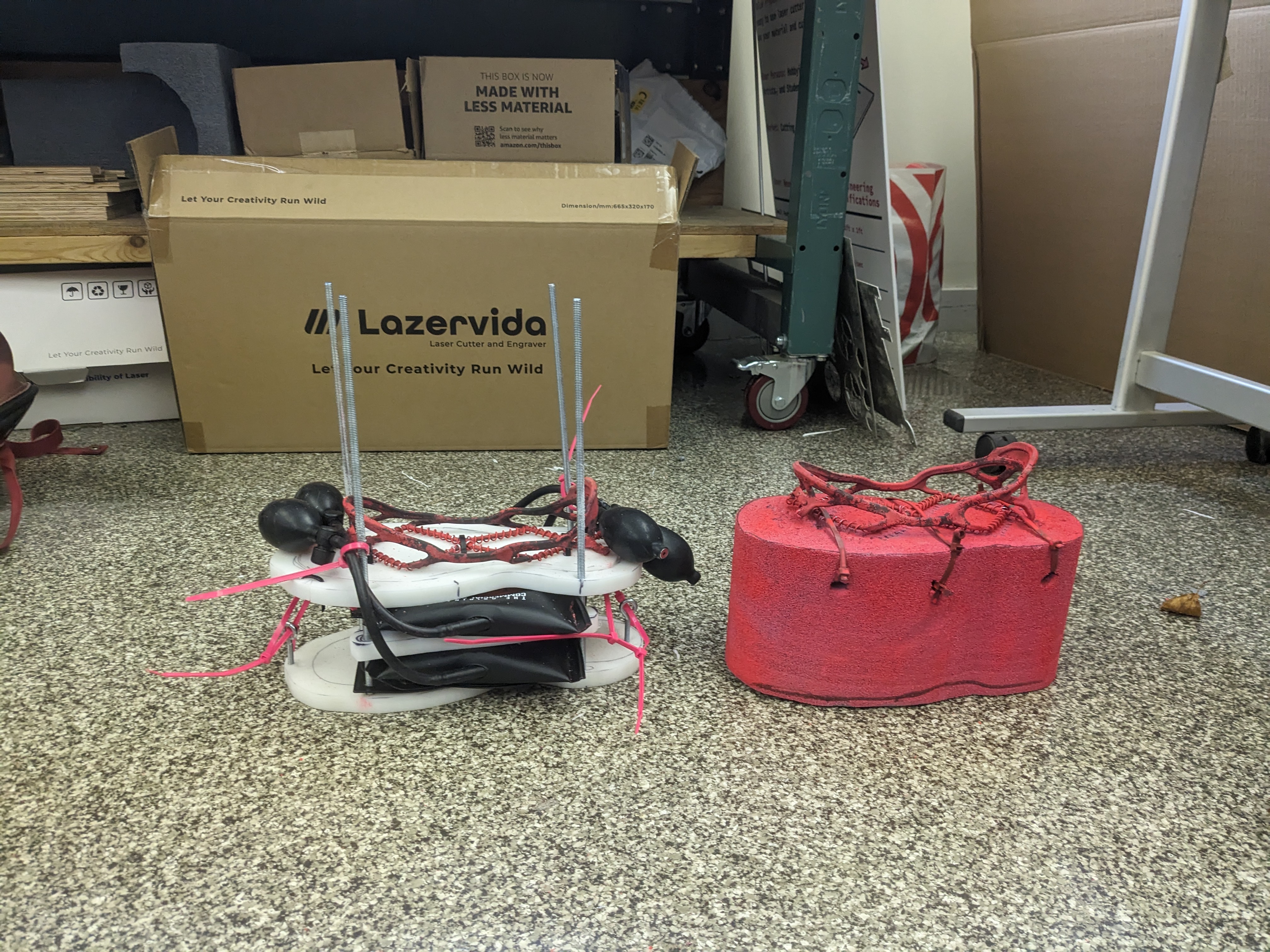
I built foam prototypes to test various heights for the Concert Lift, and after walking around, settled on 8″. I then build a “works-like” model using air-bags which deflate to a platform of 2″ and inflate to 8″ in about 20 seconds using a hand pump. The air-bags in this model could support up to 300 lbs, although other air-bags can support more. Air-bags provide a compliant base that adjusts with the user’s shifts in weight for added stability.
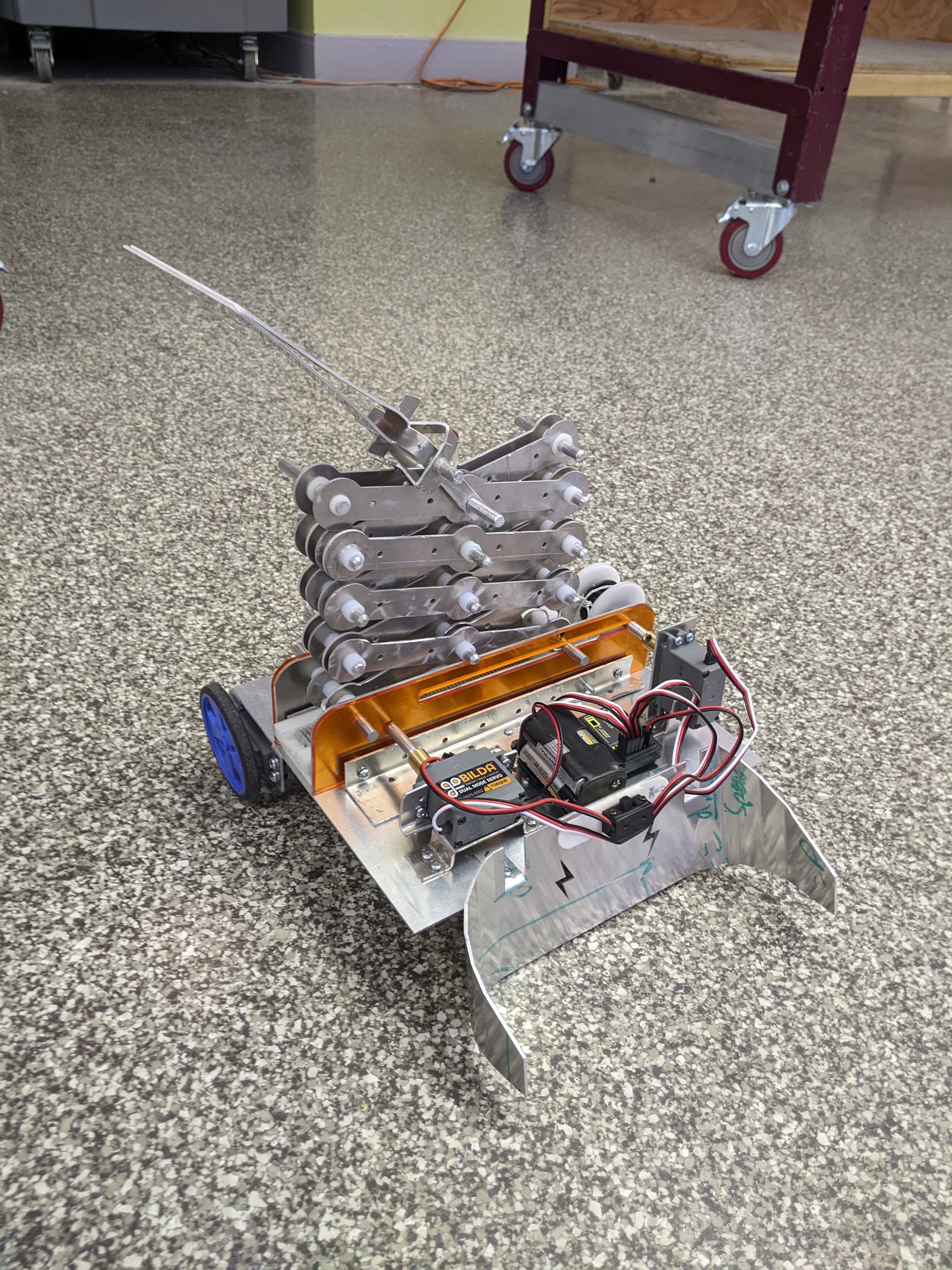
I built a challenge robot for my intro robotics class, 2.007, in which student robots competed to complete challenges on a gameboard. The challenges I completed were to pull a lever and press two buttons that were 0.5 m and 1.0 m above the ground. Each robot had to begin inside of a 1′ x 1′ x 1′ box.
I developed a deeper understanding of compliance and constraints white iterating the scissor lift on my robot, which is powered by a 12V LiPo battery to pull a lever with a force of 15 N and press buttons up to 1 m from the ground. The major challenge of this design was getting sufficient power output from a scissor lift, which took multiple trials and fine-tuning.
This robot served as an introduction to machining, 2-D cutting such as the laser cutter and water-jet, and systems modeling in Fusion 360.
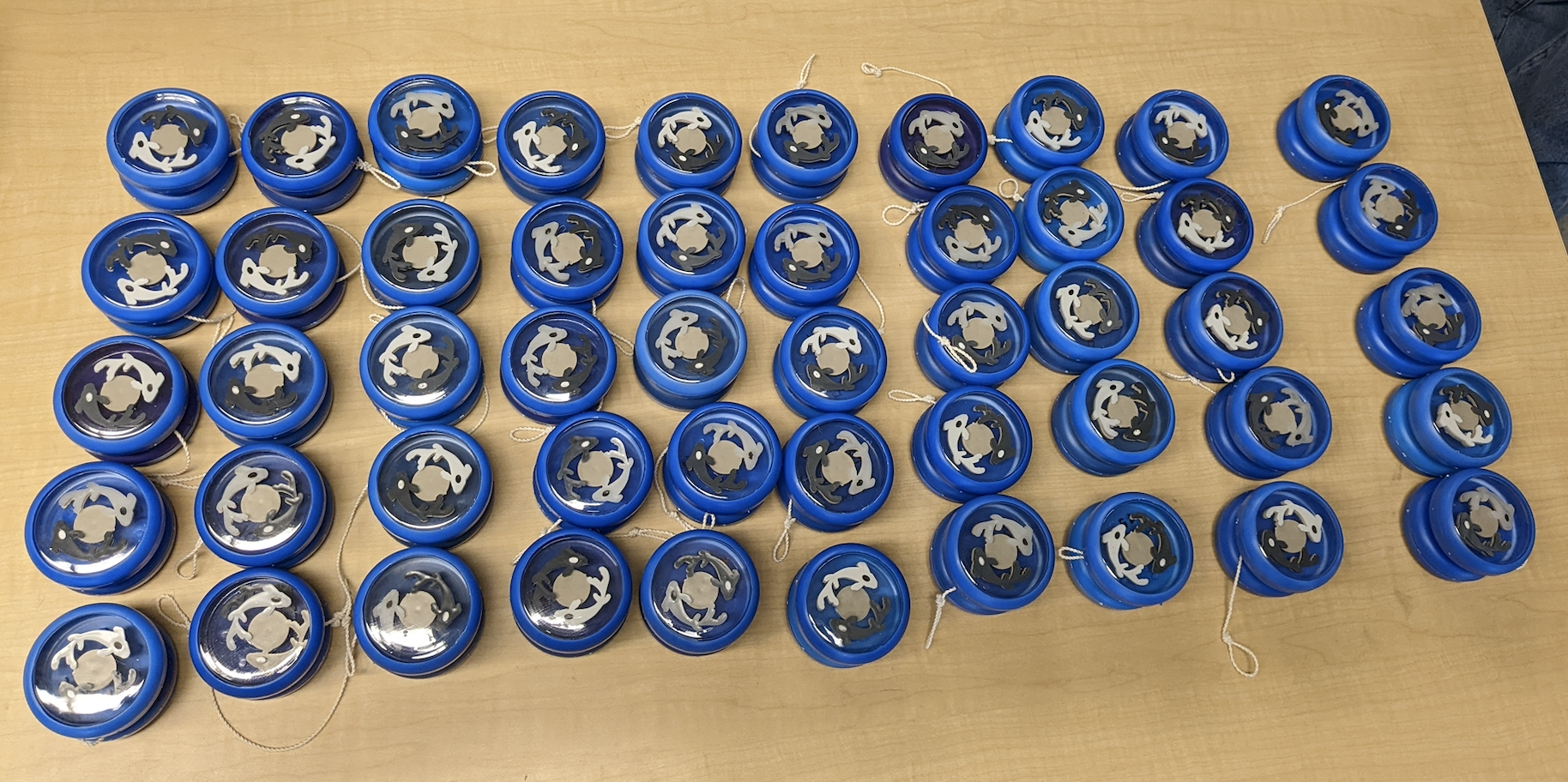
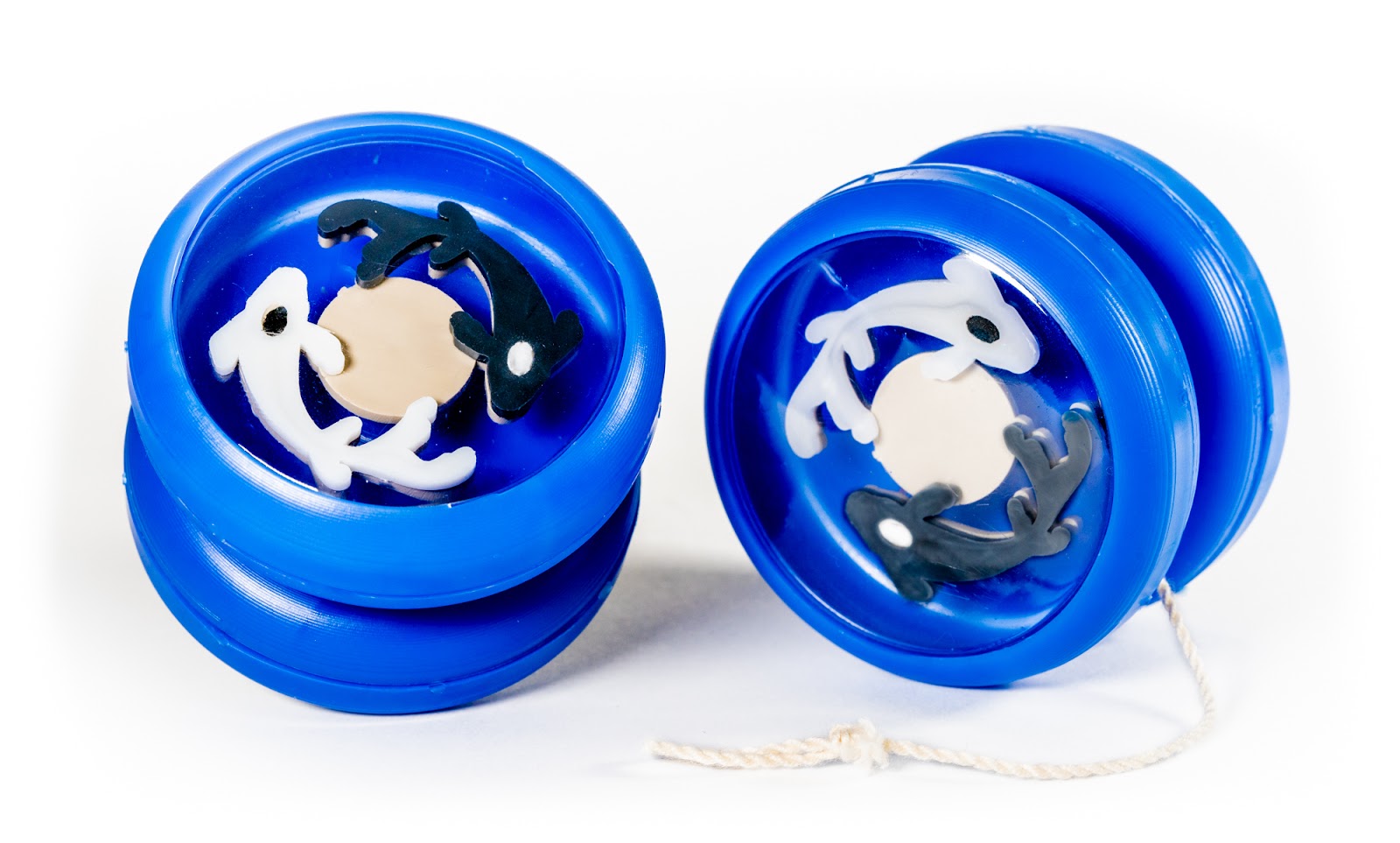
In 2.008, Design and Manufacturing II, our task was to design, CAD, and manufacture 50 yo-yos using injection molding and thermoforming. My team chose to do the Tui-La fish from Avatar.
We designed for a press fit with radial interference of 0.031 in ± 0.001 in. An early challenge we encountered was that the assumed value of thermal expansion was slightly too high, making our press fit too loose. We measured the expected versus actual thermal expansion coefficients, re-machined our molds, and found that our press fits worked well. We later iterated the molds again to add runners for the ejector pins so that no ejector pin marks were left on the yo-yo body.
We set the Tui-La fish on a bearing so that they spun when the yo-yo was in motion.
In January 2021, I worked on a project under Professor Shuhei Ono and my grad student mentor Ellen Lalk in Earth Science, where I helped build equipment to capture methane emissions from freshwater lakes. These methane samples were used to benchmark new technology measuring ratios of isotopologues — molecules containing one or more isotopes, such as CH3D, — which can determine the origin of methane emissions. I modeled and 3-D printed parts to connect the funnel to the collection chamber. Design requirements for these devices were to be under 30 lbs, so that they could be supported by 12″ buoys in the field without sinking, to be waterproof, and to be rust- and wear-proof for a period of several months. I built 8 methane capture devices which were deployed for over 6 months in Mystic Lake.
Bullkey is a small, energy-efficient tractor designed for farmers in developing nations; it’s cheaper to buy and maintain than a pair of oxen, compact for maneuverability on small farms, and can double as a motorcycle, a common mode of transport in user nations. Read more about Bullkey’s development at the GEAR Lab here.
My role in this project was to help design hydraulics, which power the plow and PTO mount — core tractor components — and run off of a motorcycle engine and body. The PTO mount can lift up to 500 lbs 1ft from the ground and would be used to carry water/pesticide/fertilizer tanks or other farm equipment. I also designed and fabricated secondary components, including a weight mount and a pesticide blower attachment which rotates 90° and sprays up to 30 feet vertically and horizontally. Most parts were fabricated in-house using water-jetting, CNC machining, and MIG and TIG welding.













 Amber Velez